
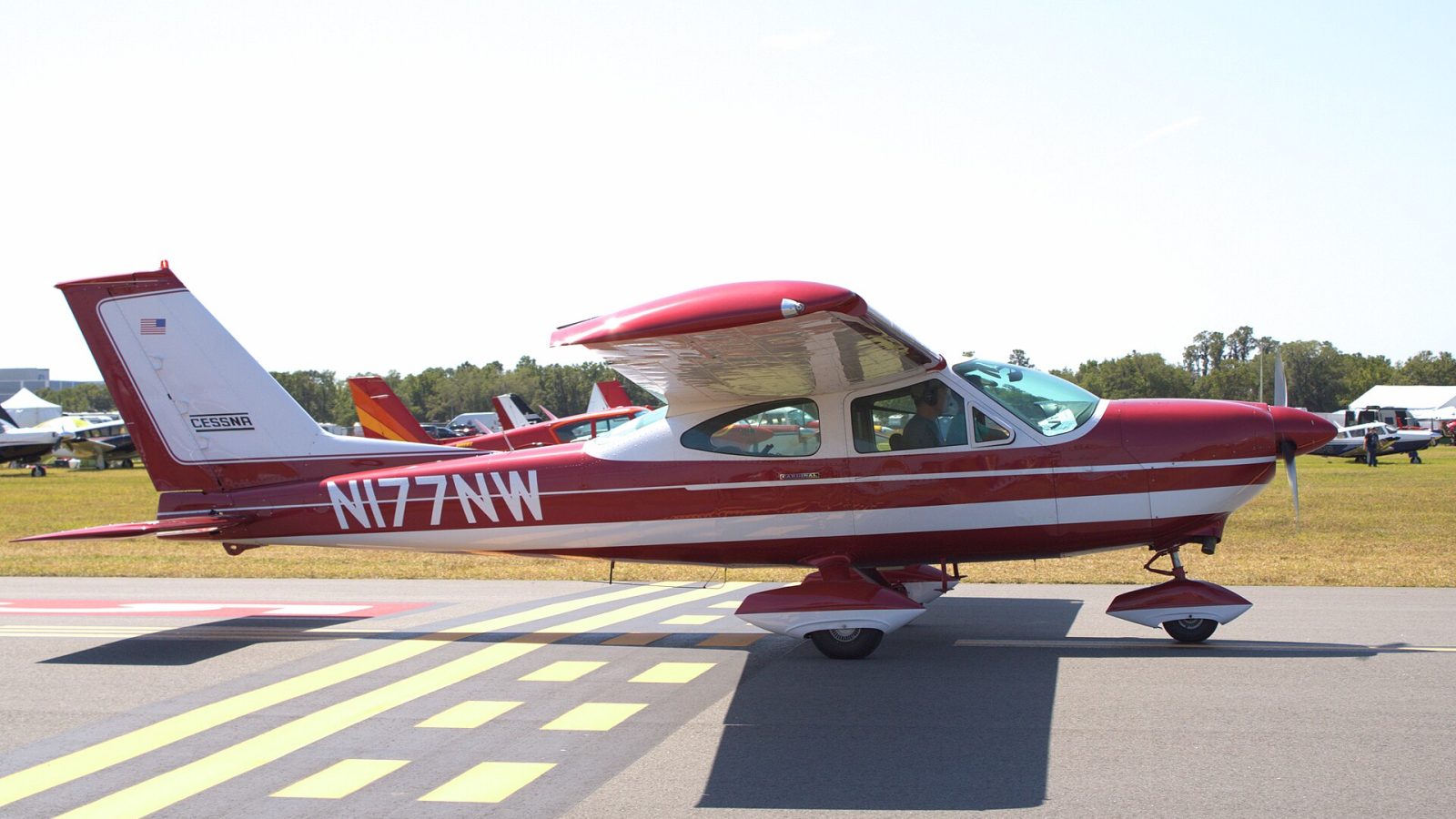
A single-engine Cessna 177 crashed on Capitol Expressway at Excalibur Drive in San Jose on Saturday, Oct. 17, 2026. Two adults and a child were hospitalized with non-life-threatening injuries, and no vehicles were hit. The FAA says the pilot reported engine issues. The FAA and NTSB are investigating; no cause has been released.
In this article
A single-engine Cessna crashed onto Capitol Expressway in East San Jose, California, on Saturday afternoon, Oct. 17, 2026. Two adults and a child were aboard. The San Jose Fire Department said all three were taken to a hospital with injuries that were not life-threatening, and that no vehicles were involved.
The Federal Aviation Administration (FAA) said the pilot reported “engine issues” before the aircraft went down, according to KTVU. The FAA and the National Transportation Safety Board (NTSB) are investigating, and no cause has been released.
What happened
The fire department said it received a report just before 3:10 p.m. that a plane had crashed near Capitol Expressway and Excalibur Drive, according to KTVU. In a post on X, the department wrote: “Small prop plane down, no vehicles involved. Two adults and one child transported with non-life-threatening injuries out of an abundance of caution. Please avoid the area.”
Fire officials also said the crash caused a “minor fuel spill which was absorbed,” Fox News reported. San Jose police said drugs and alcohol were not believed to be factors, according to KTVU. The Los Angeles Times, citing NBC, reported that the wreckage took roughly three hours to clear and that an Alum Rock Avenue off-ramp from Highway 680 was briefly closed.
Records cited by media identify the aircraft as a 1968 Cessna 177A Cardinal registered to a nonprofit flying club for San Jose State University students, alumni and faculty, according to the Los Angeles Times, which attributed the detail to ABC. Officials have not named the people aboard or said who was flying, according to AeroCorner.
AeroCorner reported, based on public flight-tracking data, that the plane took off from nearby Reid-Hillview Airport and came down roughly 1.5 miles northwest of the field. That detail comes from tracking data and has not been confirmed in an official statement, AeroCorner noted.
What the dashcam video shows
Dashcam footage credited to a driver and distributed by the video agency Storyful shows the moment of the crash. Fox News described it as showing the plane “careening into an overpass arching atop the expressway.” Other outlets describe the same footage differently. The California Post reported that the plane flew at an unusually low altitude and that one wing struck a street light pole before the aircraft pitched into a nose-first crash. NBC Bay Area, as relayed by Aerohaber, said one wing appeared “to clip a pole” before the plane cartwheeled and came to rest on its nose.
Because outlets disagree on what the plane hit first, this article does not state it as fact. Investigators have not said what the aircraft struck. We have not independently verified the footage, and we are not republishing it. The video is available through the outlets linked in the Sources section.
What officials have said about the cause
On Sunday, Oct. 18, the FAA told KTVU that the pilot of the Cessna 177 reported “engine issues” just before the crash. KTVU’s report gave no further detail about the problem. Fox News, citing KTVU, reported that the FAA and the NTSB are still investigating and have not publicly released a potential cause.
NBC Bay Area reported that the pilot radioed, “We are having engine failure, having an emergency,” according to Aerohaber’s summary of that report. We could not read NBC Bay Area’s original page, so this site treats the exact wording as secondhand. A statement by a pilot during an emergency is not a finding by investigators. The cause will be determined by the NTSB.
Why a pilot may head for a road
This section is general background, not a finding about this flight. In a column on forced landings, the Aircraft Owners and Pilots Association (AOPA) wrote that most successful off-airport landings occur in fields, and that “Roads are often the next resort for an aircraft in distress.”
AOPA said roads are tempting because they may offer a more reliable surface, but called them “a definite step down in quality for a forced landing.” The column listed overpasses, hard-to-see electrical and telecommunications lines, street signs, traffic lights and ground traffic among the risks. The column was published in April 2009, and the principle it describes is general. It does not discuss the San Jose crash.
What happens next
AeroCorner reported that the NTSB says it generally tries to complete an investigation, including a probable cause, within 12 to 24 months. That is a general target for NTSB cases, not a schedule for this one.
- Still unknown: the cause, who was at the controls, and what the aircraft struck first.
- Conflicting detail: some outlets describe the injuries as minor, while the official description from the fire department and police is “non-life-threatening.”
- We will update this article if the FAA, NTSB or local officials release new information.
Sources
- Fox News, “Cessna crashes into San Jose overpass on Capitol Expressway, 3 hurt”, accessed Oct. 24, 2026
- KTVU FOX 2, “Prop plane crash in San Jose injures 3, including child”, accessed Oct. 24, 2026
- KTVU FOX 2, “Pilot reported ‘engine issues’ before San Jose prop plane crash: FAA”, accessed Oct. 24, 2026
- EMS1 / Los Angeles Times, “3 injured when small plane crashes into Calif. traffic”, Oct. 19, 2026, accessed Oct. 24, 2026
- AeroCorner, “San Jose Plane Crash on Capitol Expressway”, accessed Oct. 24, 2026
- California Post via Yahoo News, “Dashcam catches horrifying plane crash on San Jose road”, accessed Oct. 24, 2026
- The Daily Beast, “Wild Video Shows Terrifying Plane Crash on Busy Road”, Oct. 19, 2026, accessed Oct. 24, 2026
- Aerohaber, “Engine failure may have caused small plane to crash in San Jose” (summarizes NBC Bay Area), Oct. 20, 2026, accessed Oct. 24, 2026
- AOPA, “Accident Analysis: On the road again”, April 5, 2009, accessed Oct. 24, 2026

Every fact in this article is checked against its source before publication. Editorial standards