

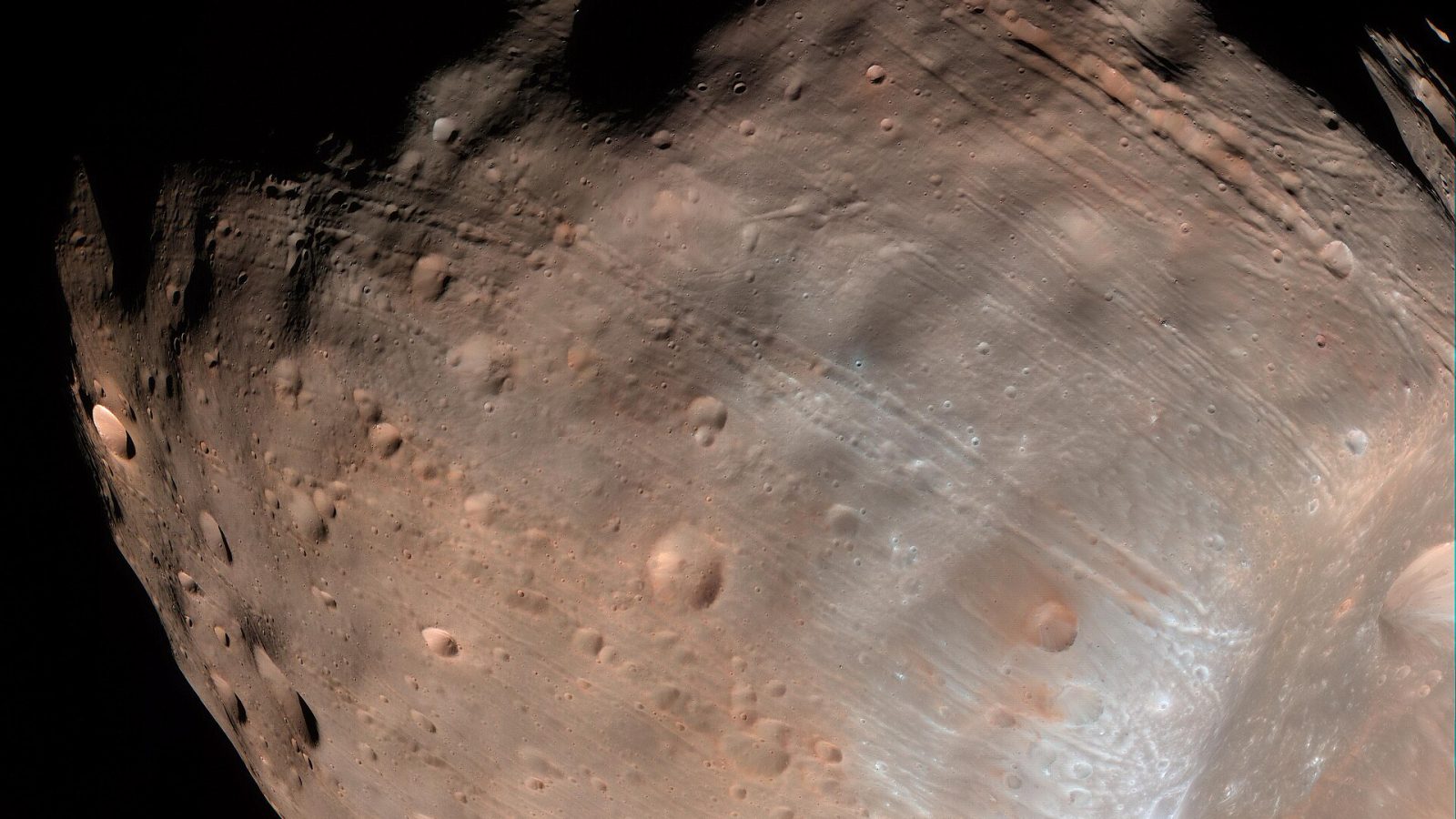
Japan's MMX spacecraft launched at 04:41:03 JST on Oct. 20, 2026 (19:41 UTC on Oct. 19) from Tanegashima Space Center. It is due at Mars in 2027 to study Phobos and Deimos, collect a Phobos sample and return it to Earth in 2031, according to JAXA and NASA.
In this article
Japan’s Martian Moons eXploration (MMX) spacecraft launched toward Mars on Oct. 20, 2026, Japan time, beginning a journey meant to end with the first samples ever brought back from Mars’s moon Phobos. The Japan Aerospace Exploration Agency (JAXA) says the H3 rocket “flew as planned” and the spacecraft was placed in its “predetermined orbit.”
When MMX launched: UTC and Japan time
JAXA launched MMX aboard H3 Launch Vehicle flight No. 10 “at 04:41:03 JST on October 20, 2026” from the Tanegashima Space Center. Japan Standard Time is nine hours ahead of UTC, so that is 19:41:03 UTC on Oct. 19 (our conversion). The partner agencies give the same moment in their own time zones: NASA lists 3:41 p.m. EDT on Monday, Oct. 19, and the European Space Agency (ESA) lists 20:41 BST on 19 October.
JAXA reports that “approximately 71 minutes and 13 seconds after liftoff, the separation of the MMX spacecraft was confirmed.” ESA Director of Science Carole Mundell congratulated the team on a “successful launch,” and ESA’s project scientist Elliot Sefton-Nash called it “spectacular.”
What MMX is trying to do
The mission’s headline goal is a sample return. JAXA’s mission site says MMX will focus on Phobos, “a Martian moon that has never been explored,” observing its topography, internal structure, composition and gravity, and returning regolith (loose surface material). JAXA’s stated target is 10 grams. ESA says MMX will be the first spacecraft to orbit Phobos, the first to collect samples from its surface, and the first to return to Earth from the Mars system.
MMX will also observe Mars’s other moon, Deimos. JAXA says that happens “during the final phase of the mission.” JAXA leads the project, with NASA, the French space agency CNES, the German Aerospace Center DLR and ESA as partners, according to ESA.
The timeline: five years, launch to landing capsule
JAXA’s mission schedule describes a roughly five-year round trip:
- 2026: Launch on the H3 rocket from Tanegashima.
- 2027: About a year of travel to the Mars system, then a course toward Phobos. NASA says the spacecraft “will arrive at Mars in 2027.” ESA’s Sefton-Nash puts arrival at “next summer.”
- 2027 to 2030: The spacecraft enters a quasi-satellite orbit around Phobos, makes detailed observations, and collects a 10-gram sample through two soft landings on the surface. NASA says sample collection will happen “no earlier than 2028.”
- 2030: The spacecraft departs the Mars system for a trip of about one year back to Earth.
- 2031: A re-entry capsule carrying the sample separates for atmospheric entry. JAXA says it is scheduled to be recovered in Australia.
Those later dates are plans, not guarantees, and JAXA and NASA describe the sampling window slightly differently, as shown above.
Why Phobos matters
Scientists do not know where Mars’s moons came from. NASA says researchers suspect the two bodies “either are remnants of an ancient collision between Mars and a large impactor or are themselves asteroids captured by Mars’ gravity.” NASA program scientist Tom Statler said that “having the answer will help illuminate that early era when Earth and the other inner planets may have been acquiring much of their water and organic compounds.”
JAXA’s principal investigator, Kuramoto Kiyoshi, writes that the Martian moons “closely resemble carbonaceous asteroids” and says the mission will also investigate how Mars lost its atmosphere and water. JAXA says “detailed observations and analysis of the samples obtained from Phobos” are meant to clarify “the formation of the Martian sphere and the Solar System.” Its second stated goal is technology: developing “technology for enabling round-trip missions to the Martian sphere and access to planetary moons.”
The international partners supply key pieces. NASA contributes the MEGANE instrument, which measures neutrons and gamma rays from the surface to determine its elemental composition, and a pneumatic sampler that gathers surface material with bursts of high-pressure nitrogen gas. NASA says it will curate about 15% of the returned sample at Johnson Space Center in Houston. ESA provided the spacecraft’s deep-space communication equipment and ground station support.
Watch the official launch broadcast
ESA’s launch page links to JAXA’s English-language launch livestream, which is on JAXA’s official YouTube channel. JAXA also posted a post-launch press conference on its channel. The embed below is JAXA’s own broadcast, not a copy.
Sources
- JAXA: Launch result of the Martian Moons eXploration (MMX) spacecraft aboard H3 Launch Vehicle flight No.10 (Oct. 20, 2026; accessed Oct. 24, 2026)
- JAXA/ISAS: MMX – Martian Moons eXploration (accessed Oct. 24, 2026)
- European Space Agency: MMX lifts off to Mars’s moon Phobos (Oct. 20, 2026; accessed Oct. 24, 2026)
- NASA Science: NASA to Help Unlock Mysteries of Mars’ Moons in Upcoming Mission (Oct. 15, 2026; accessed Oct. 24, 2026)
- NASA Science: MMX mission page (accessed Oct. 24, 2026)

Every fact in this article is checked against its source before publication. Editorial standards